
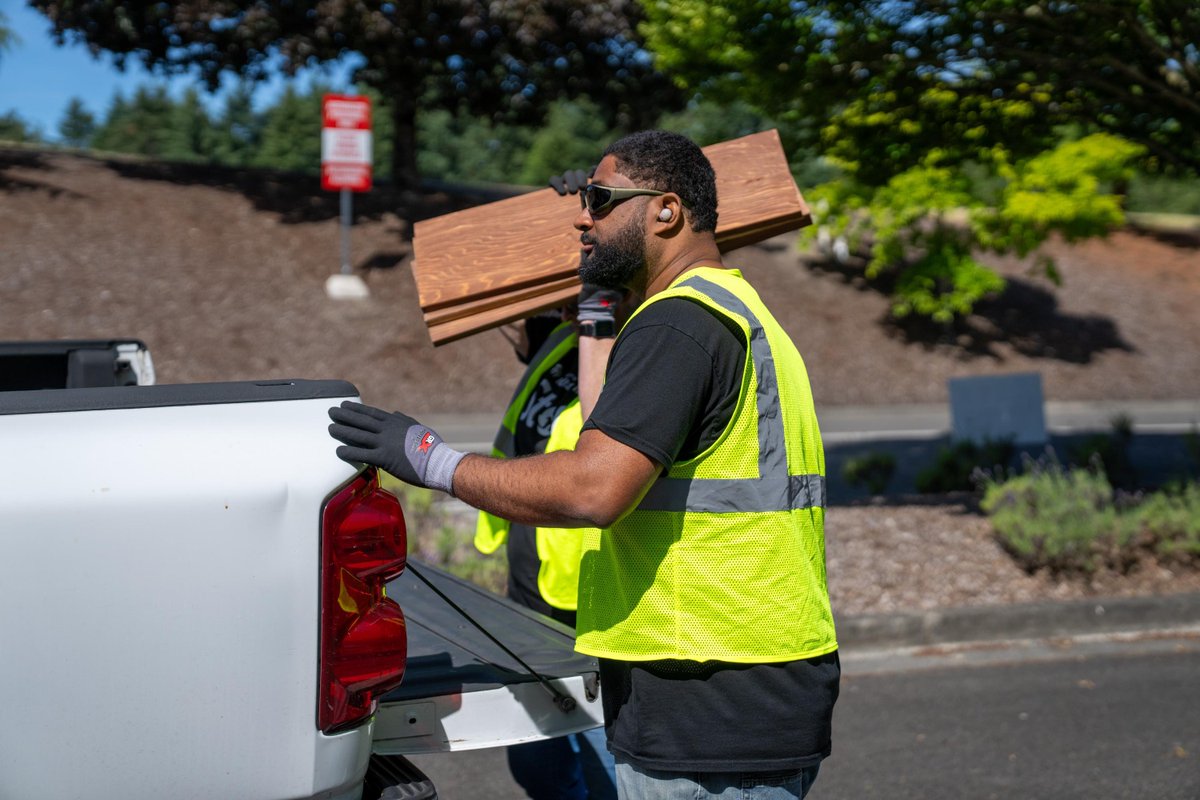
Contractors and property owners pulling demolition permits in Tacoma will have a new incentive starting July 1: get a salvage assessment, and the city will give your permits priority review at no extra charge.
The Voluntary Demolition Salvage Program waives all standard fees for priority and expedited permit processing for participants who submit a completed Salvage Assessment Form through the city's permitting portal.
The benefit extends beyond the demolition permit itself. Future building permits tied to that same project site also qualify for priority review. And the incentive applies even if the assessor finds nothing worth salvaging on-site.
The city issues roughly 100 demolition permits per year, according to District 1 Council Member John Hines.
"We issue around 100 demolition permits per year for various buildings and structures in Tacoma, and I have no doubt that thousands of tons of reusable items wound up in our landfill," Hines said in the city's announcement.
"This new program is designed to make it easy for property owners and contractors to not only have a salvage assessment but to get priority review for their permits by doing so."
Applicants hire a verified salvage assessor to evaluate their structure, then upload the completed form to the city's permitting portal. Future building permits tied to that project site then qualify for priority review.
Participation is optional and does not replace existing permit requirements.
Two Tacoma-based assessors are already listed through the Northwest Building Salvage Network: Second Use Building Materials at 2328 Fawcett Ave. and Earthwise Architectural Salvage at 628 E. 60th St., Tacoma. Seattle, Shoreline, Redmond, and Kenmore also use NBSN-verified assessors in their own permit processes.
At-Large Council Member Kristina Walker sponsored Resolution 41385, adopted March 19, 2024, which directed the city manager to explore deconstruction and salvage options.
Walker began stakeholder discussions that year with construction companies, salvage operators, Habitat for Humanity, and workforce leaders.
Construction and demolition debris accounted for about 12 percent of Tacoma's landfill volume, according to the 2024 resolution's action memorandum.
Much of the city's housing stock is wood-frame construction roughly a century old, making it well-suited for material recovery. Common salvageable items include lumber, masonry, light fixtures, cabinetry, copper pipes, and architectural elements.
Beyond permit speed, contractors who participate may also see lower hauling costs, reduced tipping fees, and opportunities for material resale or donation, according to the city.
The program is the first step outlined in Resolution 41385. Future possibilities include a citywide deconstruction ordinance, workforce development programs, and deconstruction pilots on city-owned buildings, though none have been scheduled.
Program details are posted at tacoma.gov/demosalvage.