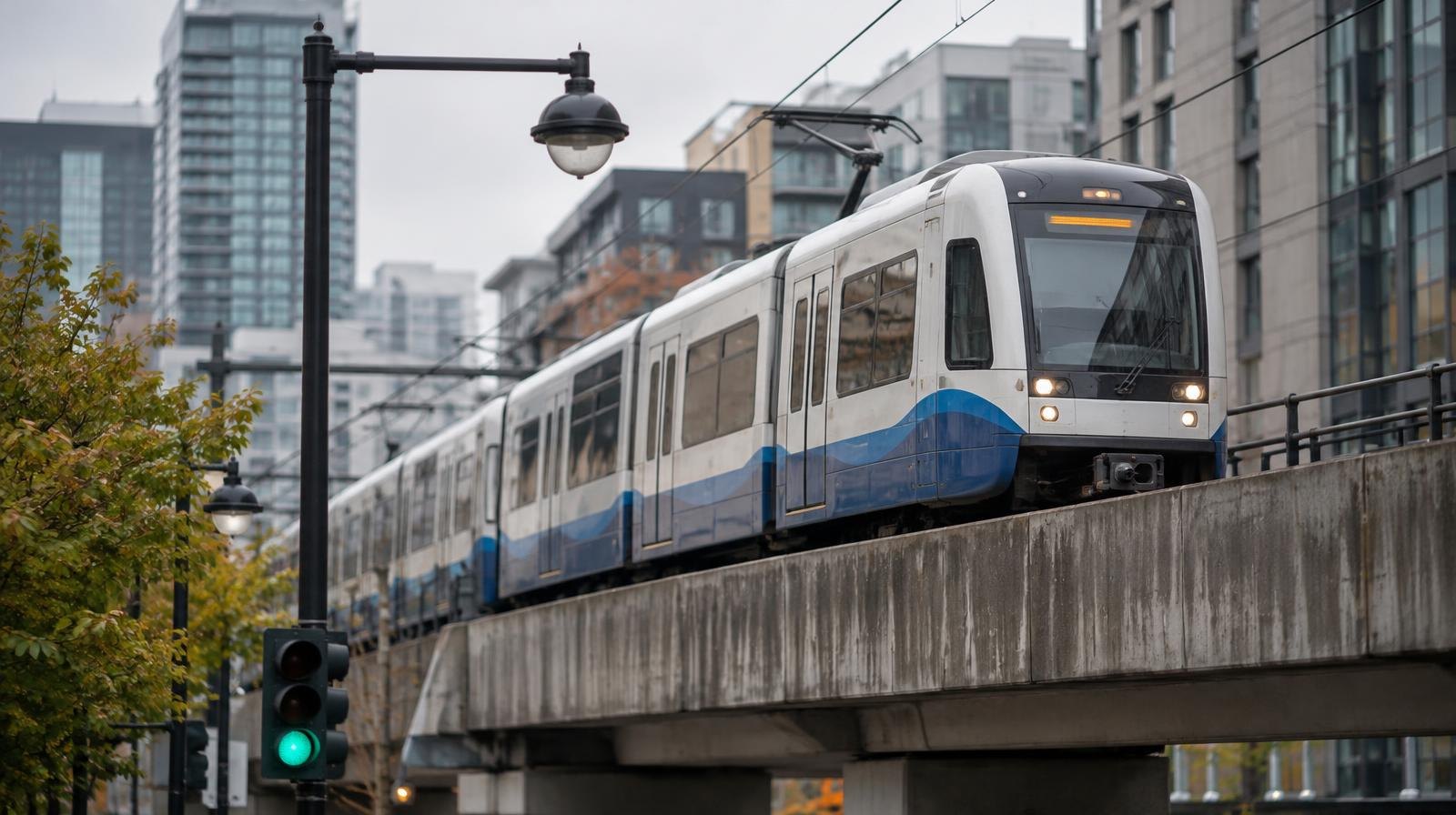
Sound Transit needs roughly $10 billion to build the Ballard light rail line by 2042, a goal Pierce County Executive Ryan Mello endorsed at a public forum Monday, Oct. 19.
Sound Transit CEO Dow Constantine told a crowd of 375 people at Seattle's National Nordic Museum that the agency has mapped a path to extend light rail to Ballard's Northwest Market Street by 2042.
It requires fresh federal and local money, financial maneuvers and cheaper station designs, The Seattle Times first reported.
If those efforts fail, riders might not get the voter-approved Smith Cove, Interbay and Ballard stations until 2060, the agency acknowledged.
Mello, who is next in line to chair Sound Transit's 18-member board, appeared on the podium and tied the Ballard commitment directly to Pierce County voters.
He acknowledged that Ballard's pro-transit voters helped create the 2016 ballot win that funded all ST3 destinations, including Tacoma.
"We're absolutely committed to successfully getting light rail to Market Street," Mello said.
What Tacoma is waiting for
The Tacoma Dome Link Extension, which would connect the city to the regional light rail spine, is officially targeted for 2035. But Sound Transit does not anticipate breaking ground until 2030, and the agency's construction phases have generally lasted six years or more, according to The Urbanist. An estimated 36,000 daily riders would use the Tacoma Dome station.
The extension to Tacoma Community College (TCC) via the T Line is slated for 2043, according to the long-range plan the board approved on a 16-2 vote in late May, as KOMO News reported.
In July, the Tacoma City Council unanimously approved a deal for Sound Transit to pay the city roughly $16 million. About $10 million covers the city accepting a 1.4-mile section of Sounder track between Lakewood and the Tacoma Dome, and about $6 million funds signal and safety upgrades on the T Line's 2.4-mile Hilltop extension, which opened in 2023, The News Tribune reported.
The money problem
Sound Transit's funding shortfall traces to a $35 billion long-term gap driven by inflation, rising construction costs, labor shortages and supply-chain disruptions since voters approved the ST3 package in 2016.
The public already pays $2.4 billion a year, or $700 per capita, in property, sales and car-tab taxes to Sound Transit. The current 58-mile system serves 165,000 daily riders.
To reach Ballard by 2042, executives said an extra $1 billion must be found by 2030 for land purchases, then $7 billion to $9 billion by 2033 for construction contracts. The agency is assuming a 35% federal contribution for Seattle projects, a ratio similar to what the federal government provided for the Lynnwood and Federal Way extensions.
Federal funding remains uncertain. As of summer 2026, the Trump administration had not released major Capital Investment Grants except for a $1.3 billion share for commuter rail in Utah.
Constantine said a lot depends on national elections and who controls the next Congress.
Tacoma voices
Tacoma City Councilmember Sarah Rumbaugh raised the alarm about Sound Transit's funding gap at a New Tacoma Neighborhood Council meeting in April. "We've been paying into ST3, and the promise was that the spine would be finished to Tacoma," she said at the time, urging residents to contact Sound Transit to keep the Tacoma extension a top priority.
In March, Tacoma's city council pushed back when Sound Transit considered ending the light rail line at Fife instead of Tacoma Dome, as KOMO reported. That option was not included in the plan the board approved in May.
The Tacoma Dome Link Extension has already been delayed five years, from its original 2030 target to 2035. The agency's next stated milestone: securing $1 billion for Ballard land purchases by 2030, the same year Tacoma Dome construction is set to begin.