Museum of Glass moved approximately 1,350 objects from its permanent collection to secure off-site storage during the Tacoma museum's first capital renovation.
Rebecca Engelhardt, the museum's collections and exhibitions director, described the effort in a blog post published Nov. 4. The work comes ahead of the museum's Dec. 12 grand reopening, when renovated gallery spaces and a new Lino Tagliapietra Legacy Gallery will debut.
Each relocated object was packed, labeled and tracked to its temporary location, Engelhardt wrote. The team also moved 172 vitrines to off-site storage and removed 151 pedestals from the construction path.
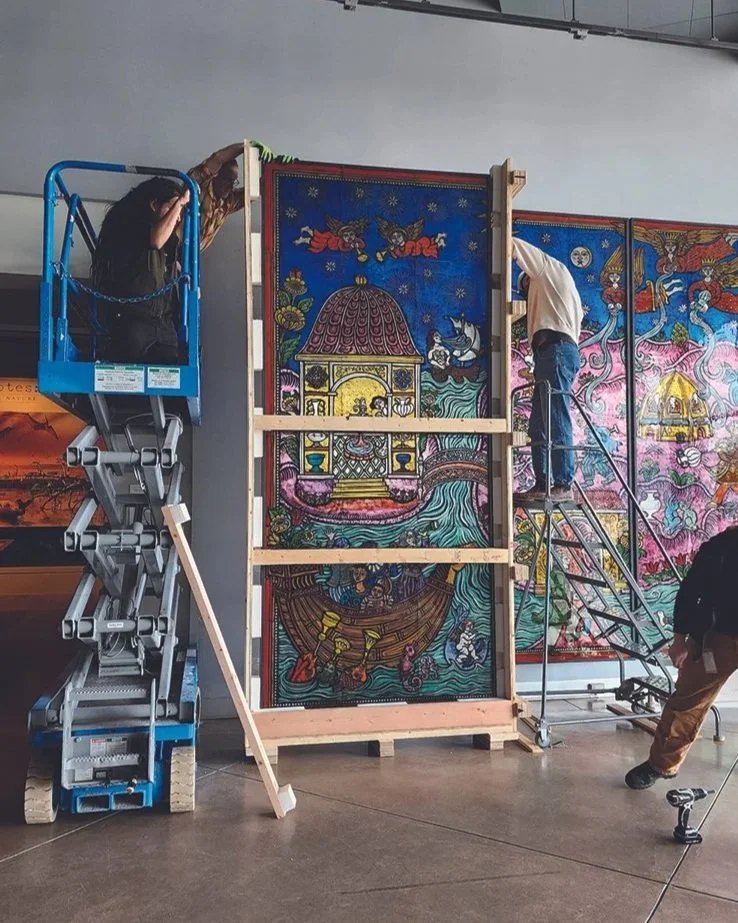
Some pieces required extra planning. The museum's Gathering the Light by Cappy Thompson was packed into three custom-built crates with help from Art Work Fine Art Services, according to Engelhardt. Each crate weighed more than 900 pounds and was removed by gantry and forklift.
Protecting what stayed behind
Another 1,350 objects remained on-site. For those works, the museum conducted stability assessments and added protective measures, Engelhardt wrote. Objects already stored in foam cavities got supplemental cushioning and bracing to reduce vibrational impact.
Displayed artwork is routinely secured with a low-tac adhesive called Rhoplex N580, which helps prevent damage from seismic activity or contact in high-traffic areas. That method also works against construction vibrations, Engelhardt said.
Round glass pieces needed special attention. Nick Davis, a hot shop technician at the museum, fabricated custom mounts for Paul Stankard's Orbs to keep them stable.
Geophones track vibrations in real time
The museum installed continuous vibration monitoring using triaxial geophones provided by Geo-Instruments. Four units placed at strategic points measure vibrations along three perpendicular axes and transmit real-time data to project staff, according to Engelhardt.
The stakes are high with glass art.
Before construction began, the museum consulted specialists including Arne Johnson, who focuses on vibration analysis in museum settings, and Dr. Bill Wei, whose research covers the effects of vibrations on fragile art. Megan Harvey, collections manager at Auckland War Memorial Museum, also provided guidance that helped establish safety thresholds.
Matt Lubbers, senior project executive at general contractor BNBuilders, described the challenge in a separate museum blog post published in September. The most difficult phase, he wrote, was demolishing the theater and installing new steel in the ceiling. The crew used saw cutting on concrete floors instead of standard demolition to reduce noise and vibration.
What comes next
Once the renovation wraps, staff will begin moving the off-site collection into newly customized cabinets. Engelhardt wrote that the process will take months.
The grand reopening is set for Dec. 12, with a ribbon cutting at 10:30 a.m. and galleries open from 10 a.m. to 5 p.m. Museum members receive free admission.