When Gerald Dillon walked into a second-grade classroom at Chief Leschi Schools as a teaching assistant, students rushed from their seats for fist bumps and hugs.
The 18-year-old, who once found high school boring, graduated in June after career-training courses renewed his motivation.
"It was kind of the first time I felt excited to go to school," Dillon told the Associated Press, reflecting on helping younger students practice reading and learn the life cycle of a frog.
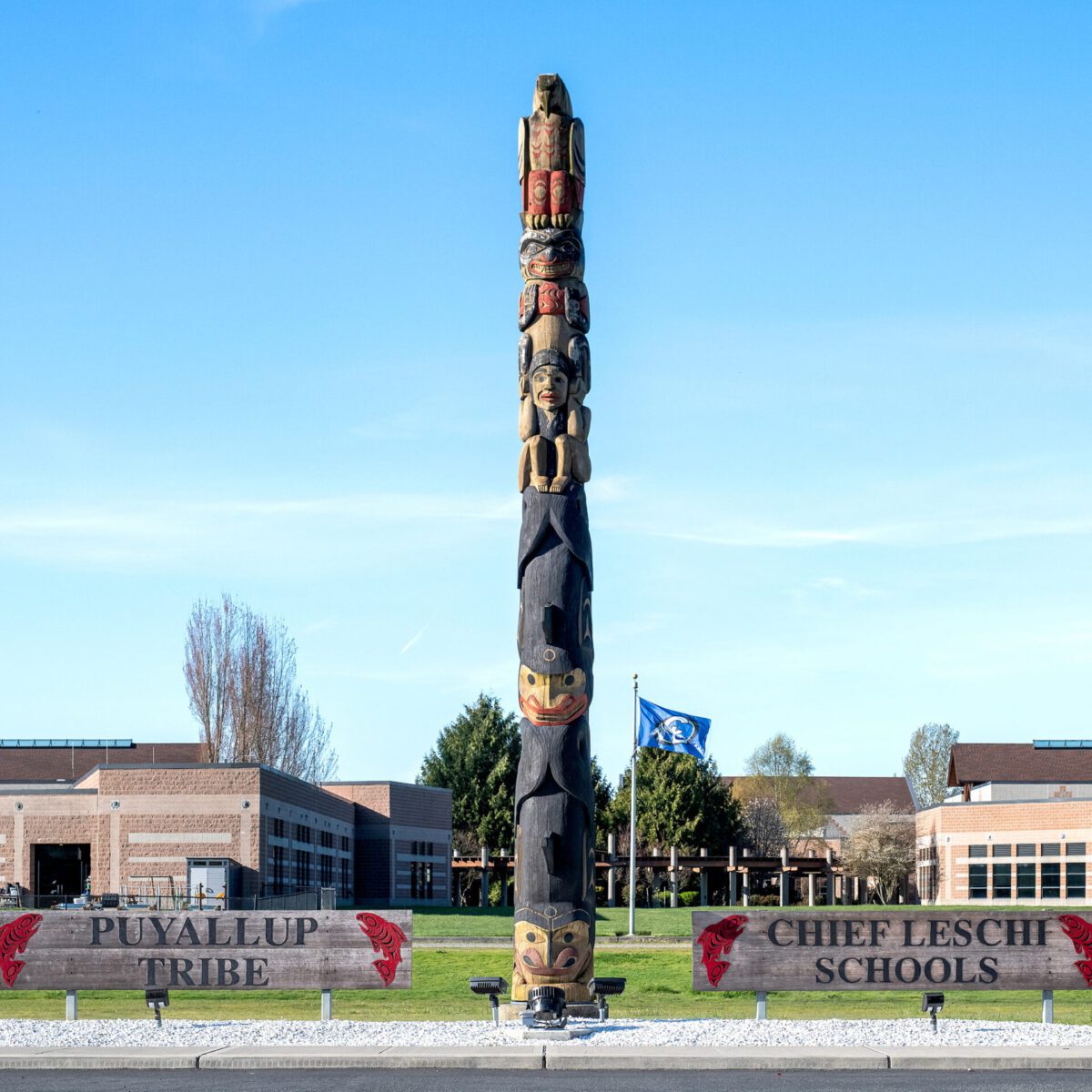
Dillon's story tracks a broader shift at Chief Leschi Schools, which federal grant documents describe as the nation's largest Bureau of Indian Affairs school.
Located on the Puyallup Reservation in Pierce County, the school's four-year graduation rate climbed from 53% in 2019 to 87% in 2025, according to school data reported by KING5 and the AP on July 12.
Career pathways tied to tribal enterprises
Chief Leschi launched its career and technical education program in fall 2020 with $25,000 from the Puyallup Tribal Council and approval from the school's all-tribal-member board.
The program offers five pathways: hospitality, natural resources, education, media technology, and health sciences. Each connects to Puyallup tribal enterprises including the Emerald Queen Casino, Puyallup Tribal Health Authority, and Puyallup Fisheries.
An internship program for juniors and seniors followed in fall 2021. Students can earn dual college credit through Pierce College, Bates Technical College, Clover Park Technical College, and Central Washington University at no cost if they earn a C or better.
"We devalued the trades. That was a mistake," Superintendent Don Brummett told the AP.
Gains reflect both innovation and better data
Across all 183 Bureau of Indian Education schools nationwide, the four-year graduation rate hit a record 79% in 2025, up from just over 50% in 2015. But the improvement reflects two factors: genuine academic progress and a 2018 overhaul of data collection that stopped counting students who transferred to other schools as dropouts.
BIE chief academic officer Carmelia Becenti said the agency set a new accountability framework for its schools. An AP analysis found graduation rates across the system rose 55% since the new reporting standards took effect, with nine schools reporting growth of 100% or more.
Federal staffing cuts raise concerns
The gains come as federal workforce reductions thin the agency overseeing these schools. The BIE lost 8% of its staff between November 2024 and November 2025, dropping from 3,095 to 2,843 employees, according to Education Week.
A February 2026 GAO report found Indian Affairs' overall workforce shrank 11% since January 2025, with six of 12 regional director positions filled by acting officials.
In November 2025, the U.S. Department of Education began transferring oversight of dozens of Native student programs to the BIE without prior tribal consultation. Jason Dropik, executive director of the National Indian Education Association, said the move caused delays and disruptions to services, warning that drastic changes without tribal input carry unintended consequences for students.
Local connection: 32,000 Native residents in Pierce County
Chief Leschi Schools sits about five miles from downtown Tacoma. Pierce County is home to about 32,000 Native American residents, according to Census data, and the Puyallup Tribe has about 4,000 enrolled citizens.
In March 2025, Puyallup School District and 12 other Pierce and King County districts signed a 10-year agreement with the Puyallup Tribe to expand culturally relevant education pathways for the 944 Native students the district serves. That agreement runs through December 31, 2035.